


| 2015-09-21 |    |
Scottish Wildcats Threatened by Feline Form of HIV
The endangered Scottish wildcat could be further threatened by a deadly virus that is known to cause the cat version of Aids, research has found.
Experts have isolated two cases of Feline Immunodeficiency Virus (FIV) from cats with a mixed domestic-wildcat ancestry.
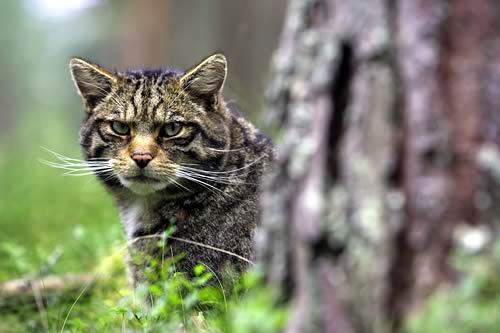
Scottish Wildcat
photo: Peter Cairns/ Northshots
One of the cases was detected in an area that has been identified as a priority zone for wildcat conservation. Although FIV is common in feral cats, these are the first known cases of the virus affecting hybrid cats in a wildcat priority area.
Wildlife experts from the University of Edinburgh’s Royal (Dick) School of Veterinary Studies and National Museums Scotland made the discovery after carrying out post mortem examinations on 23 feral and hybrid cats from around Scotland.
A long-haired tabby found dead in a barn in Morvern in the Western Highlands was one of the animals to test positive for the virus. Morvern is one of six places identified by Scottish Wildcat Action last year as a priority area for wildcat conservation.
There is currently no vaccine for FIV. The infection is transmitted mainly when adult male cats fight and experts say neutering is key to tackling the disease.
Professor
Anna Meredith, of the Royal (Dick) School of Veterinary Studies,
said:
“This recent find confirms that pet owners must be encouraged
to vaccinate and neuter their cats, particularly if they live in a wildcat
priority area. Cats are susceptible to other illnesses, such as cat
flu and feline leukemia virus, and these can be common in feral cats
too. That means the importance of vaccinating and neutering cats is
at an all-time high as we continue to work together to save our Scottish
wildcat.”
Dr Roo Campbell, Scottish Wildcat Action project manager, said:
“Communities across Scotland can play a huge part in helping us to save
the wildcat by contacting their local project officer or reporting sightings
through our website. We have less than five years to make a big impact
as part of our Scotland-wide wildcat action project, but we can make
a huge difference not only by drawing on the expertise of our partners
but also by working with local people at every level.”
Scottish Wildcat Action is a national project to save the Scottish wildcat that involves 21 partner organisations, including the Royal (Dick) School of Veterinary Studies. The six year programme aims to reduce threats in wildcat priority areas, breed wildcats for later release and contribute to better understanding through new research.


